


Cup-Type, Tube-Type and Link-Type Rain Chains: Which One is Best for You?
There are three main shapes of rain chains: Link-Type, Cup-Type and Tube-type. In this column, we will explain the characteristics of each shape to assist you in selecting the appropriate rain chain for your installation location.
What Is a Rain Chain? A Guide to Japanese Functional Art
What are the differences in the shapes of rain chains?
Features of Tube-Type Rain Chains
Tube-type rain chains have cup-shaped covers attached to each chain link, creating a chain that repeatedly catches rainwater and directs it downward.
It guides rainwater down steadily while creating a quiet vertical line on your home's exterior.
Browse our tube type rain chain collection

Features of Link-Type Rain Chains
Link-type rain chains are characterized by their lightweight and simple design. They can be used to adorn buildings like necklaces, adding a touch of elegance. However, since water flows along the exterior of the chains straight down to the ground, they tend to produce more splashing compared to cup-type rain chains. In debris-rich areas like those with fallen leaves, ring-type rain chains require less maintenance due to reduced risk of ring clogging.
Browse our link type rain chain collection
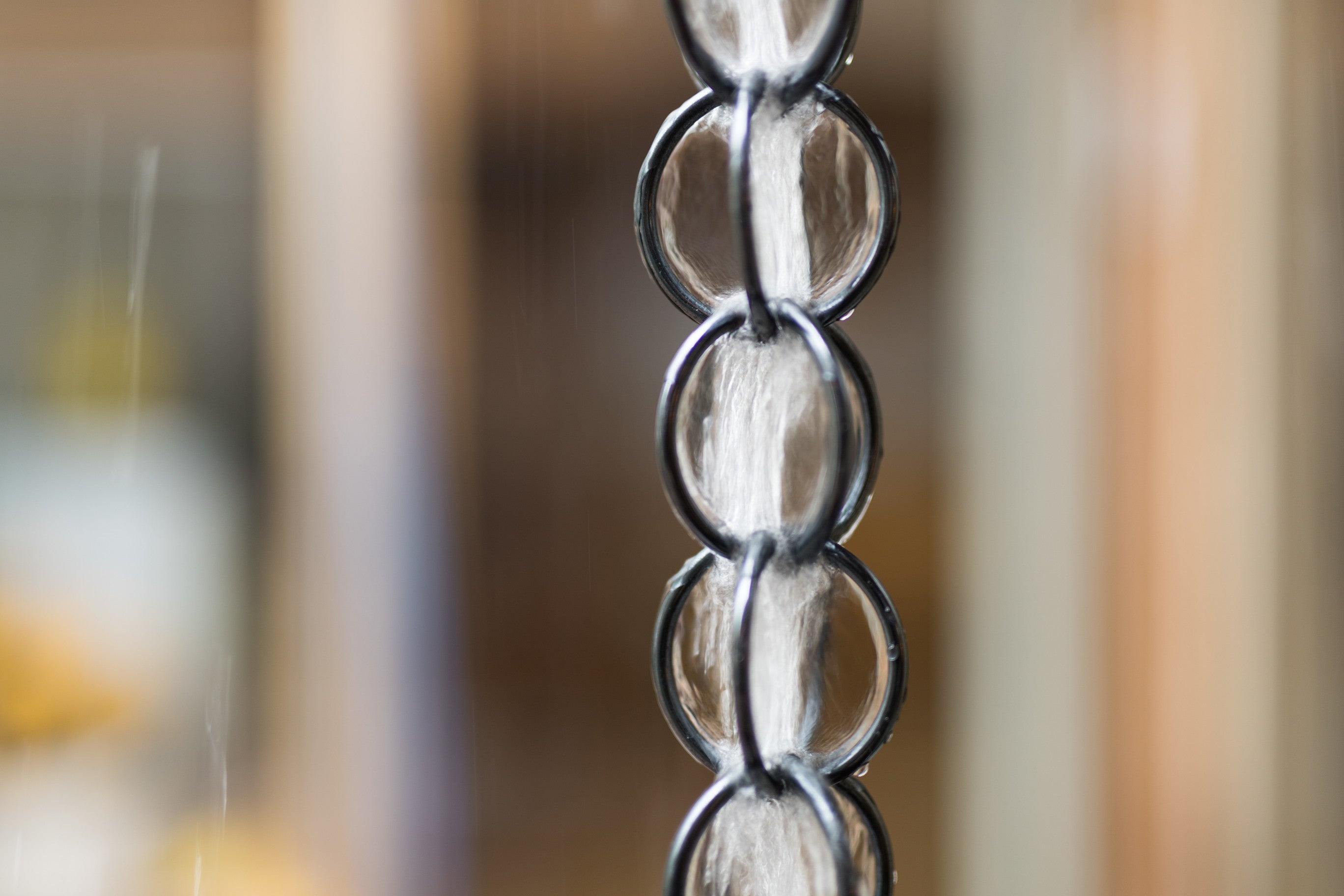
Features of Cup-Type Rain Chains
Cup-type rain chains are their ability to collect and channel water inside the cups, resulting in a clean water flow with minimal splashing. In areas with tall trees nearby, where leaves may flow into the cups, the frequency of maintenance such as cleaning, may increase. Cup-type rain chains offer various designs based on the shape and material of the cups, allowing you to choose a rain chain that complements the architectural design, whether it be traditional Japanese, modern, or classical. Another significant feature of cup-type rain chains is the soothing sound of water flowing gracefully.
Browse our cup type rain chain collection

Ideal Locations for Installation

Considering the characteristics of each type, Link-type rain chains are effective in reducing the cleaning frequency when installed in places with tall trees or near forests, where debris may flow into the cups. They are also appropriate for areas where you desire subtlety in the rain chain, owing to their understated, simple design. Since water tends to splash, we recommend installing it in areas with minimal pedestrian traffic, such as places other than the entrance or areas with less human activity in the garden.
Cup-type and Tube-type rain chains, on the other hand, produce a clean water flow with minimal splashing, making them appropriate for installation even in locations with relatively close foot traffic. You can also enjoy the sound of flowing water, making them ideal for installation in areas with frequent visitors, such as near the entrance or on the terrace where people gather for conversations.
Select the best rain chain that accentuates the architectural design with graceful water flow and enjoy your daily life, especially on rainy days.
A comparison of rain chains based on functionality and design.
Choosing by Drainage Capacity: How to Select Models for Heavy Rain